A strategy can look perfect on paper, the market can be ready, and the resources can be in place, yet performance still falls short. Why does this happen? In many organizations, the gap is not strategy but leadership, especially as change accelerates and expectations continue to rise across every level of the business.
Executive leadership training has become a strategic lever for organizations that want measurable outcomes, not just activity. In Saudi Arabia, where Vision 2030 is reshaping industries, leadership capability directly influences performance, innovation, and talent retention, making it clear that success depends on leaders who can turn plans into real results.

Quick Tip:
Align your executive leadership training with real business KPIs, not just learning outcomes. When leaders apply skills like decision-making and communication directly to measurable goals such as productivity, retention, or digital transformation, organizations often see performance gains of up to 17% while staying aligned with Vision 2030 priorities.
Key Insights on Executive Leadership Training
- Executive leadership training turns strategy into measurable results by closing the execution gap.
- Strong leadership improves productivity, engagement, and retention through clear direction and accountability.
- Modern leadership focuses on people, using communication, coaching, and emotional intelligence to drive performance.
- Continuous leadership development delivers long-term impact, not just short-term skill gains.
- Better decision-making and adaptability enable leaders to manage complexity and support sustainable growth.
- Developing future leaders strengthens succession planning and long-term organizational stability.
Why Leadership Drives Business Performance Today
Organizations today are shifting from task-based management to leadership-driven performance, where leaders influence outcomes, shape culture, and drive results. Strong leadership directly impacts employee engagement, with managers influencing up to 70% of how motivated and productive teams feel. As a result, leadership capability has become a key driver of productivity, customer satisfaction, and long-term retention.
At the same time, decision-making has become more complex. Leaders must balance data, uncertainty, and stakeholder expectations while keeping teams aligned with business goals. Effective leadership connects strategy with purpose, enabling organizations to stay agile, encourage innovation, and outperform competitors. This is where corporate leadership training becomes essential, equipping leaders with the skills to translate vision into action, build high-performance cultures, and deliver measurable business impact.
The Growing Need for Leadership Development in Saudi Arabia
Leadership development in Saudi Arabia is accelerating rapidly under Vision 2030, driven by economic diversification, Saudization, and the shift toward a knowledge-based economy. As organizations expand and new roles emerge, the focus is no longer just on hiring talent but on building leaders who can think strategically, adapt to change, and lead in complex, fast-moving environments.
However, many high-potential professionals are stepping into senior roles without structured preparation. This is where an effective executive training program becomes essential, helping leaders develop decision-making, digital awareness, and people-focused leadership skills. By combining practical learning with real-world application, organizations can build strong leadership pipelines that support long-term performance and national transformation goals.
From Supervisor to Leader: What Skills Truly Matter Today
The shift from supervisor to leader is not about managing more work, it is about leading people and shaping direction. Today’s leaders are expected to go beyond tasks and focus on trust, adaptability, and long-term impact. In fast-moving and often hybrid environments, success depends less on technical expertise and more on how effectively leaders connect, guide, and empower their teams.
Communication That Drives Clarity and Trust
Clear communication is no longer optional, it is a leadership requirement. Executive leadership classes help leaders communicate with purpose, align teams, and build trust across functions. More importantly, strong leaders listen actively, not just to respond but to understand. This reduces misalignment, strengthens relationships, and improves execution across the organization.
Decision-Making in Fast-Paced Environments
Modern leaders operate in uncertainty where quick, high-impact decisions are expected. Executive training courses develop structured thinking, risk evaluation, and the ability to stay composed under pressure. Leaders who can regulate their response and think clearly in complex situations reduce errors and drive better outcomes.
Coaching for Performance, Not Just Oversight
Leadership today is about developing people, not controlling them. Through accredited executive coaching programs, leaders shift from directing tasks to coaching individuals. They identify strengths, close skill gaps, and support growth, which directly improves engagement, retention, and team performance.
Managing Conflict and Building Team Alignment
Conflict is inevitable, but how leaders handle it defines team performance. Leaders with strong emotional intelligence manage tensions calmly and fairly. Leadership training equips them to resolve issues, maintain trust, and build aligned teams that collaborate effectively instead of working in silos.
Time, Priority, and Team Management
Leaders are expected to manage priorities while enabling others to perform. Business leadership training courses focus on delegation, ownership, and productivity. Instead of micromanaging, effective leaders empower their teams, creating space for innovation while maintaining accountability.
Adaptability and Strategic Leadership
Beyond daily operations, leaders must think ahead and adapt quickly. They need to respond to change, embrace continuous learning, and connect team efforts to broader organizational goals. Strong leadership combines agility with strategic vision, ensuring both short-term execution and long-term growth.
Beyond Training: Driving Real Leadership Impact
Leadership training focuses on short-term skill building, while leadership development builds long-term capability. Training may improve specific skills like communication or decision-making, but development shapes how leaders think, adapt, and lead in complex situations. This distinction is critical, as organizations that invest only in training often see limited impact, whereas those focused on development achieve sustained performance improvement.
Real impact comes from combining coaching, mentoring, and experiential learning within a continuous development journey. Leaders learn not just through theory but by applying skills in real-world scenarios, supported by feedback and guidance. This ongoing approach ensures leadership capability evolves over time, helping organizations build resilient leaders who can drive long-term growth and adapt to changing business demands.
Benefits of Executive Leadership Training for Organizations
The leadership training delivers measurable improvements in productivity, decision-making, and team performance by developing leaders who can drive results in complex business environments.
- Higher Employee Engagement: Strong leadership improves how employees feel, perform, and stay. When leaders communicate clearly and support growth, engagement rises and turnover drops, helping organizations retain high-potential talent.
- Increased Productivity: Trained leaders align teams, set clear expectations, and drive accountability. This improves performance and leads to measurable gains in productivity and operational efficiency.
- Strategic Decision-Making: Leadership training strengthens leaders ability to analyse complex situations and make data-driven decisions. This supports long-term growth and reduces costly errors.
- Stronger Organizational Culture: Leaders shape culture through communication, trust, and collaboration. Effective leadership creates aligned, high-performing teams and supports innovation.
- Greater Adaptability: Leadership training builds agility, helping leaders manage change, respond to challenges, and guide teams through uncertainty with confidence.
- Future-Ready Leadership: Business leadership training courses help identify and develop future leaders. This ensures strong succession planning and long-term organizational stability. For additional insights, leaders can explore this resource on top leadership skills every Saudi manager needs in 2026.
Choosing the Right Executive Leadership Training Program
Choosing the right executive leadership training program has a direct impact on how effectively leaders apply new skills within an organization. The focus should be on building long-term capabilities rather than delivering short-term learning outcomes.
Accreditation is one of the first factors to consider. Programs accredited by recognized bodies follow structured frameworks and maintain globally accepted standards. However, accreditation alone does not guarantee effectiveness.
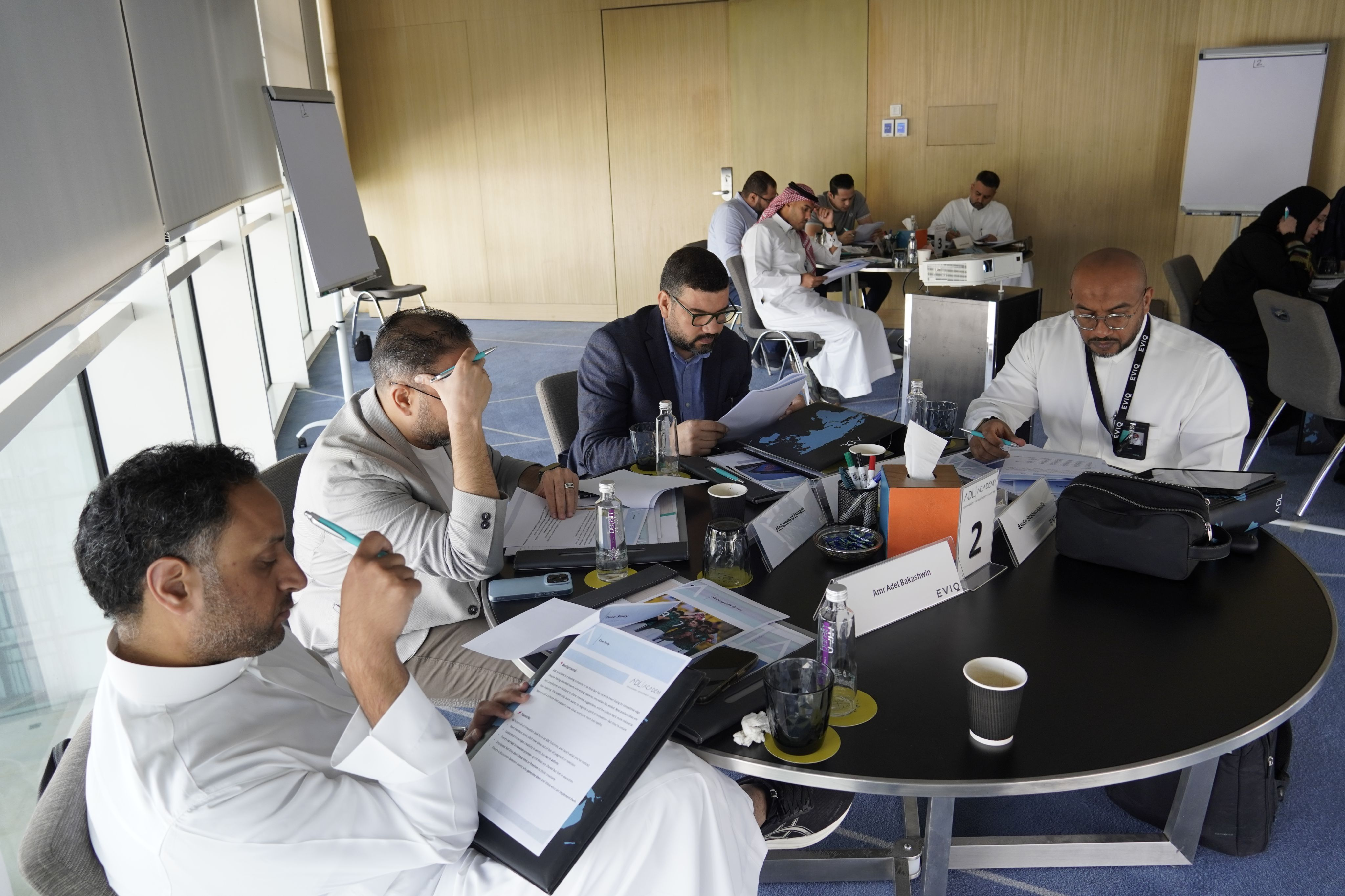
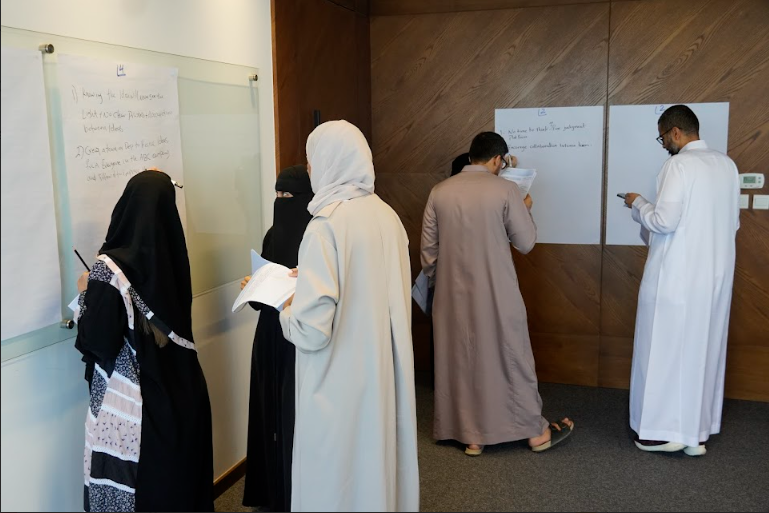
The most successful leadership programs follow a clear development journey. Instead of isolated sessions, they combine:
- Structured workshops
- Leadership coaching
- Real-world application
This approach ensures that learning translates into measurable performance improvements.
In the Saudi context, leadership development must also align with Vision 2030, organizational transformation, and evolving workforce expectations. Programs that integrate these factors tend to deliver stronger results.
Customization is equally important. Generic training rarely addresses specific business challenges. Effective executive training programs should align with:
- Organizational goals
- Industry requirements
- Leadership capability gaps
Delivery format also plays a key role. Blended and cohort-based models often improve engagement, accountability, and long-term retention.
Organizations looking for tailored solutions can explore structured programs such as corporate training in Saudi Arabia offered by ADL Academy, which are designed to support long-term leadership development.
Measuring the Impact of Executive Leadership Training
Leadership development should be treated as a measurable investment.
Organizations can track impact through key metrics such as:
- Employee engagement levels
- Productivity improvements
- Leadership performance indicators
- Retention rates
When implemented effectively, leadership training delivers a strong return on investment. It improves both individual performance and overall organizational outcomes.
Conclusion: Leadership Investment Powers Business Success
Leadership development is no longer optional, it is a strategic priority for organizations aiming for sustainable growth. Executive leadership training strengthens productivity, improves engagement, and builds leaders who can navigate change and deliver consistent performance.
The next step is simple. Assess your current leadership gaps, identify high-potential talent, and invest in structured development that delivers measurable results. If you are ready to build a stronger leadership pipeline, explore tailored solutions with ADL Academy to start a focused leadership transformation journey.
FAQs
Accredited executive coaching programs provide personalized development that improves leadership effectiveness. They help leaders address real challenges and deliver measurable results.
The training courses combine skills training with long-term development strategies. This ensures leaders can apply learning directly to their roles and improve performance.
The Leadership Training delivers ROI through increased productivity, improved employee retention, and stronger leadership pipelines. It directly impacts organizational performance.
Business leadership training programs prepare future leaders by developing key skills and capabilities. This supports succession planning and ensures long-term organizational stability.
Executive coaching provides personalized, one-on-one support that helps leaders apply learning directly to real business challenges. Through coaching programs, leaders refine decision-making, improve performance, and accelerate leadership transformation with measurable results.
Practical learning ensures leaders can apply skills immediately in the workplace. Executive leadership classes that use workshops, simulations, and real-world scenarios deliver faster, more effective results compared to theory-based training alone.