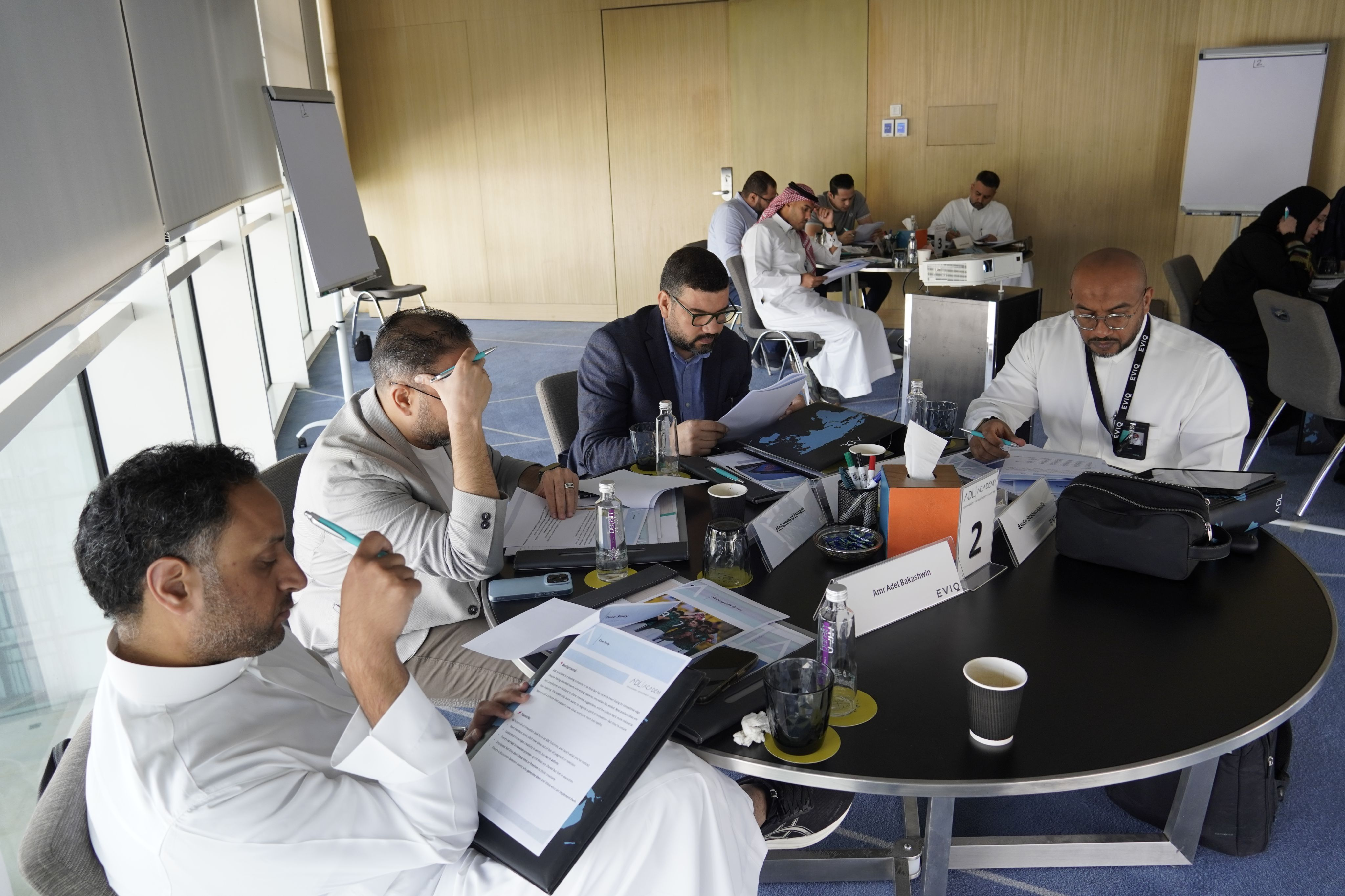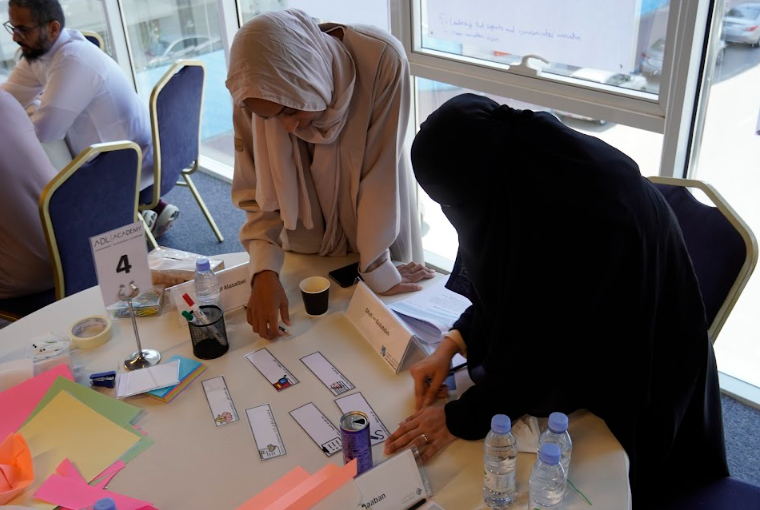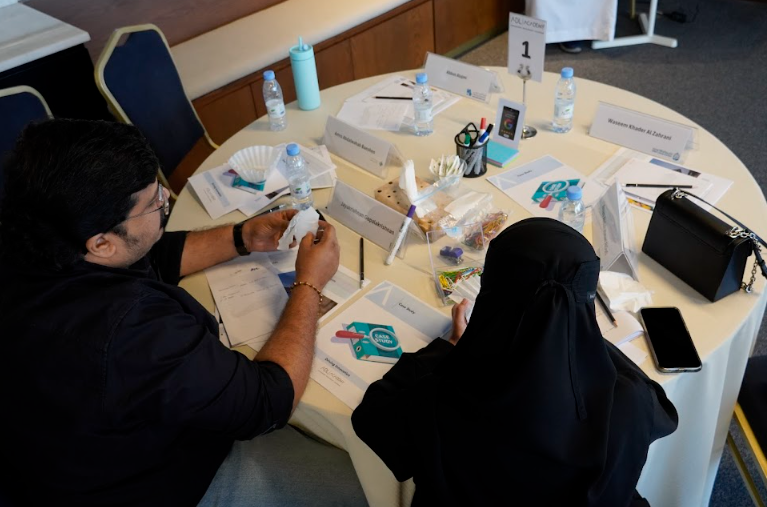
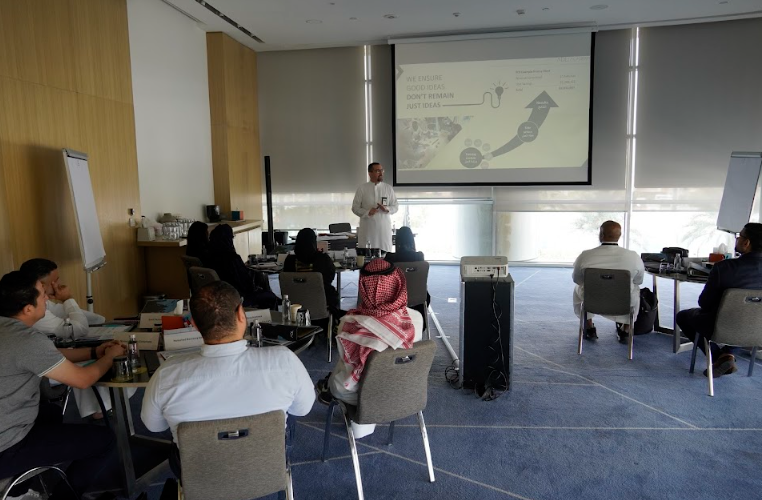
Leadership rarely starts with a title. It shows up in everyday decisions when a manager resolves conflict, brings clarity to uncertainty, or takes accountability under pressure. These moments shape how teams respond and how organizations perform. In modern workplaces, leadership is not about authority. It is about influence, consistency, and guiding people through change with confidence.
This is where leadership development matters. Strong leaders are not built on instinct alone. They are developed through structured learning, real world application, and continuous feedback. Organizations that invest in this approach build teams that are aligned, engaged, and more productive, with leadership directly contributing to measurable business outcomes.

Quick Tip:
Leaders do not build these capabilities alone. Provide access to structured programs that blend global best practices with Saudi workplace context. This is how strategic thinking, cultural intelligence, and communication translate into real performance aligned with Vision 2030.
Key Facts: Leadership That Drives Performance
- Leadership is defined by daily actions built on influence, accountability, and consistency.
- Core skills like communication, adaptability, and emotional intelligence directly impact team success.
- Strong leadership boosts engagement, retention, and business growth.
- Real development comes from structured training, practical application, and continuous feedback.
- Avoiding gaps like poor communication and low accountability strengthens effectiveness.
- The right training approach turns leadership into measurable results aligned with Vision 2030.
What Are the Most Important Qualities of a Good Leader?
Effective leaders are defined by practical behaviors that drive performance, guide teams, and support business goals. These qualities include clear communication, sound decision making, cultural awareness, and the ability to build trust. They are not fixed traits but capabilities that can be developed with the right structure and real-world exposure.
Rather than treating leadership as a long list of skills, it is more effective to group these qualities into key areas such as strategic thinking, people leadership, and adaptability. In today’s corporate environments, especially within Saudi organizations, these capabilities must align with both global best practices and local workplace realities to deliver consistent results.
At ADL, leadership qualities are not just identified. They are developed through structured assessments and real-world application. This ensures that leadership capability is not theoretical but directly tied to business performance.
7 Core Qualities That Define Great Leaders
Great leaders are defined by a set of practical behaviors that build trust, guide teams, and deliver results. These leadership qualities reflect what makes a great leader in modern organizations, where success depends on strong communication, accountability, and adaptability. Rather than relying on authority, effective leaders empower teams, make informed decisions, and maintain clarity during change.
Self-awareness
Self-awareness helps leaders understand how their behavior impacts team performance and decision-making. Without it, leaders often create confusion or tension that affects productivity.
Example: A leader who recognizes their reactive communication style learns to respond calmly under pressure, improving trust and alignment. This capability is strengthened through structured feedback and reflection, making it a core part of leadership development.
Communication
Clear communication ensures teams stay aligned, focused, and accountable to shared goals. Poor communication leads to delays, errors, and misalignment.
Example: A manager who delivers structured updates and sets clear expectations helps the team execute tasks more efficiently. Strong communication is developed through real-world practice and guided learning, ensuring it translates into workplace performance. For that reason, communication skills training can help strengthen workplace performance.
Integrity
Integrity builds credibility through consistent actions and accountability. Leaders who lack integrity struggle to maintain trust within their teams.
Example: A leader who takes ownership of mistakes instead of shifting blame earns long-term respect and strengthens team culture. This quality is reinforced through practical scenarios that focus on accountability and ethical decision-making.
Vision
Vision allows leaders to connect daily tasks with long-term business objectives. It ensures teams understand the purpose behind their work.
Example: A leader who aligns team goals with company strategy increases motivation and drives better results. Developing this capability requires structured thinking frameworks that link strategy with execution.
Emotional intelligence
Emotional intelligence enables leaders to manage their own emotions while understanding team dynamics. It plays a key role in collaboration and conflict resolution.
Example: A leader who handles difficult conversations calmly maintains team stability and prevents unnecessary escalation. This skill is developed through applied learning that focuses on real workplace interactions.
Decision-making
Strong decision-making ensures progress even in uncertain or high-pressure situations. Delayed or unclear decisions often slow down performance.
Example: A manager making timely and informed decisions under pressure keeps projects on track and teams confident. Effective decision-making improves through structured frameworks and scenario-based learning.
Adaptability
Adaptability allows leaders to respond effectively to change without losing direction. It is critical in fast-moving and evolving business environments.
Example: A leader who adjusts strategy during market shifts helps the team remain competitive and focused. This capability is built through continuous learning and exposure to dynamic business challenges.
These leadership skills are not developed by chance. They are built through structured learning, real-world application, and continuous feedback, which is essential for organizations aiming to improve performance and long-term growth.
Why Leadership Qualities Matter More Than Ever in Modern Workplaces
Leadership qualities matter today because they directly shape how teams operate, how employees stay committed, and how organizations respond to change. In fast-moving workplaces, strong leadership skills such as communication, adaptability, and decision-making are essential to maintain clarity, consistency, and reliable execution.
Impact on Team Performance
Leadership has a direct influence on how teams function day to day. When leaders provide clear direction and take ownership, teams operate with focus and confidence. This improves coordination, reduces delays, and ensures work is completed with consistency. In contrast, unclear leadership creates gaps in direction that slow down execution and affect results.
Employee Engagement and Retention
Leaders play a key role in shaping the overall employee experience. When leaders listen, support, and communicate with intent, employees feel valued and motivated to contribute. This strengthens engagement and reduces unnecessary turnover. Strong leadership creates an environment where individuals remain committed and perform at a steady level.
Managing Change and Uncertainty
Organizations today operate in environments where priorities shift quickly. Leaders who remain adaptable and aware help teams stay steady during periods of change. They bring clarity to evolving situations, guide transitions effectively, and ensure that shifting conditions do not disrupt progress or decision-making.
Business Outcomes and Organizational Growth
Leadership is closely connected to overall business performance. Strong leaders align teams with organizational priorities, improve collaboration, and support better decision-making across functions. This leads to stronger output, a more stable culture, and sustainable growth over time.
This is why leadership development for organizations is no longer optional. It is a business requirement. At ADL, programs are designed to improve team effectiveness, strengthen engagement, and increase productivity through guided, practical learning.
Assess your leadership gaps and explore corporate training solutions built to deliver measurable results.
How to Develop Leadership Qualities
Leadership qualities are built through consistent practice, not one-time learning. Leaders improve when they apply skills in real situations, reflect on outcomes, and act on feedback. This strengthens decision-making, communication, and overall team performance.
- Apply Skills in Real Situations: Leaders develop faster when they practice in actual workplace scenarios. Real experience builds confidence and improves how decisions are made under pressure.
- Use Feedback to Improve: Regular input from peers and teams helps identify gaps that are not always visible. Acting on feedback strengthens self-awareness and leadership effectiveness.
- Follow a Structured Approach: Without structure, development becomes inconsistent. A guided framework ensures leaders focus on the right skills and improve in a measurable way.
- Learn Through Practical Training: Through corporate leadership training, leaders practice key skills, receive targeted feedback, and refine their approach in real-world situations.
At ADL, leadership development is built around practical frameworks and real business scenarios. This ensures leaders do not just understand concepts, but apply them in ways that improve team performance and business results.
Common Leadership Mistakes That Hold People Back
Even capable leaders face challenges when certain behaviors go unchecked. These issues reduce clarity, weaken alignment, and limit overall effectiveness. Recognizing and addressing these gaps is essential for building strong leadership capability within organizations.
- Choosing Approval Over Respect: Leaders who focus on gaining approval often avoid difficult decisions and conversations. This weakens authority and lowers performance expectations. Effective leadership requires a balance between approachability and clear, consistent standards.
- Poor Communication: Inconsistent or unclear communication leads to confusion, delays, and missed priorities. Without clarity, teams struggle to execute effectively. Strong leaders communicate expectations, direction, and feedback in a structured and consistent way.
- Lack of Accountability: When leaders do not take ownership of outcomes, it affects trust and team discipline. Accountability sets the tone for performance. Leaders who model responsibility create an environment where expectations are understood and results are reliable.
- Resistance to Feedback: Leaders who resist feedback limit their own growth and discourage open communication. This creates blind spots that affect both decision-making and team performance. Strong leaders actively seek input and use it to refine their approach.
These challenges are common, but they can be addressed through structured leadership development, where leaders build awareness and strengthen the capabilities needed to improve long-term performance.
Choosing the Right Corporate Leadership Training Program
Not all training programs deliver results. Organizations must evaluate carefully:
- Is it customized to business needs or generic?
- Does it focus on practical application or just theory?
ADL’s programs are designed around real corporate challenges. They are tailored to organizational needs and focused on measurable outcomes. Organizations looking for effective training can explore structured programs through corporate training in Saudi Arabia and align their leadership strategy with proven frameworks.
Conclusion: Great Leaders Are Built, Not Born
Sustainable leadership is developed through consistent effort, not one-time learning. It grows through guided development, practical experience, and continuous refinement. Organizations that invest in leadership development build teams that operate with clarity, accountability, and strong performance standards. At ADL Academy, this is achieved through programs designed to turn leadership capability into real workplace impact.
The objective is not just to understand leadership, but to strengthen it in a structured and measurable way. As business environments continue to evolve, leadership must adapt to remain effective. Organizations that identify their gaps and invest in the right development approach build leaders who can guide teams with confidence, respond to change, and deliver consistent results over time.
FAQs
Leadership development for organizations is a structured process of building leadership capability through training, coaching, and real workplace application. Programs like ADL’s Leadership Acceleration Program combine guided learning, feedback, and on-the-job practice to ensure skills translate into measurable performance outcomes.
A great leader combines communication, decision-making, emotional intelligence, and accountability to influence teams and deliver results. These capabilities are strengthened through practical learning, where leaders apply skills in real business situations and improve through continuous feedback.
Leadership skills are developed through structured programs that combine interactive training, workplace application, and ongoing coaching. Leaders practice these skills between sessions, ensuring learning is applied directly to real challenges and delivers measurable impact.
Corporate leadership training equips leaders with practical skills to manage teams, improve performance, and handle complex business challenges. Structured programs aligned with global standards help organizations build consistent leadership capability and achieve better outcomes.
Key leadership qualities include communication, adaptability, accountability, emotional intelligence, and decision-making. These are developed through competency-based training and real-world practice, enabling leaders to perform effectively in dynamic business environments.
A structured leadership development program strengthens decision-making, communication, and accountability across teams. By applying these skills in real workplace scenarios, leaders improve team effectiveness, increase productivity, and contribute directly to measurable business outcomes.