
The role of managers is changing rapidly. In 2026, organizations no longer need leaders who only supervise tasks and monitor performance. They need managers who can guide teams through uncertainty, adapt to technology, communicate clearly, and create high-performing workplace cultures. Modern workplaces now demand a balance between human leadership and digital awareness.
Managers are expected to lead people, understand data, support employee growth, and make smarter decisions in fast-moving workplaces. As a result, strong management skills have become essential for productivity, employee engagement, and long-term business success. This article explores the seven key skills modern leaders need to adapt, improve team performance, and succeed in 2026.

Quick Tip:
Modern managers should focus equally on people leadership and digital adaptability. Strong communication, emotional intelligence, and data awareness often help teams stay productive, engaged, and resilient in fast-changing workplace environments.
Key Facts: Modern Leadership in a Nutshell
- Successful managers combine people leadership with digital adaptability.
- Clear communication and emotional intelligence strengthen trust, teamwork, and engagement.
- Strategic thinking helps leaders navigate uncertainty and business change effectively.
- AI awareness and data literacy support smarter, faster decision-making.
- Coaching-focused leadership improves employee growth, accountability, and performance.
- Continuous learning and adaptability keep managers future-ready in evolving workplaces.
1. Strategic Decision-Making
Managers today operate in environments shaped by economic uncertainty, workforce transformation, and rapid technological change. Slow or ineffective decisions can quickly impact productivity, employee morale, and operational performance. Strong strategic thinking helps leaders balance immediate business priorities with long-term organizational goals.
Modern managers must assess risks, identify opportunities, and respond confidently without losing direction during periods of change. For example, leaders may need to restructure workflows, adapt to changing customer expectations, or manage hybrid teams while maintaining operational continuity. These situations require business management skills that combine analytical thinking, adaptability, and leadership confidence.
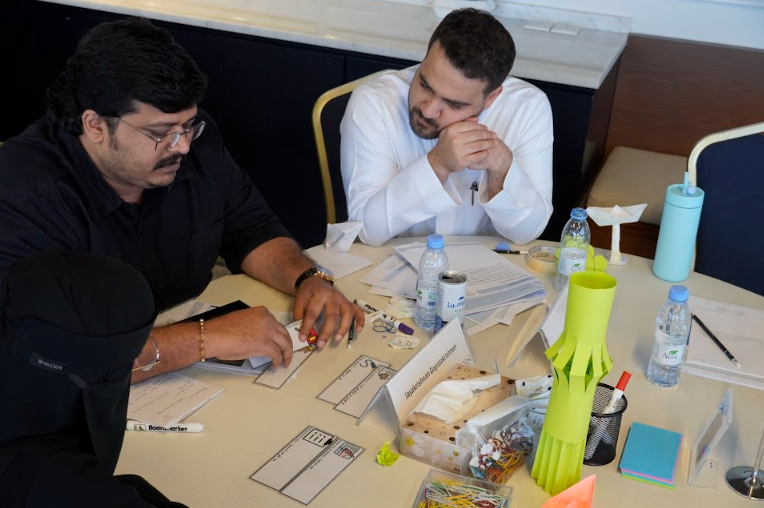
Through simulations, real-world business scenarios, and experiential learning frameworks, ADL helps organizations develop stronger strategic leadership capability through programs like the Leadership Acceleration Program designed for modern workplace challenges.
2. Emotional Intelligence and Human-Centered Leadership
Technical expertise alone no longer defines leadership success. Modern employees expect managers to lead with empathy, emotional awareness, and strong interpersonal skills that build trust and healthier workplace relationships.
Managers with emotional intelligence often communicate more effectively, manage conflict professionally, and maintain employee motivation during periods of pressure or organizational transition. Human-centered leadership has become increasingly important in hybrid and remote work settings where disengagement and communication gaps can directly affect team performance.
Teams typically perform better when managers actively listen, understand employee concerns, and communicate with clarity and respect. This shift is moving organizations away from authority-driven leadership toward more collaborative and people-focused management approaches.
3. AI, Data Literacy, and Digital Management Skills
One of the most important management skills in 2026 is digital leadership awareness. Managers are now expected to understand how AI, automation, and workplace analytics influence decision-making, productivity, and overall business performance. While leaders do not need advanced technical expertise, they must know how to use digital tools and data insights to make smarter operational decisions.
Modern managers regularly work with:
- AI-powered reporting systems
- Digital collaboration platforms
- Workflow automation tools
- Employee performance dashboards
These technologies help managers improve efficiency, monitor team performance, and respond faster to operational challenges. At the same time, leaders must understand ethical AI usage, responsible workforce management, and data-driven decision-making practices to maintain trust and accountability across teams.
Organizations that fail to strengthen digital management capability may struggle to keep pace with evolving business demands and technological advancement. Modern managers must combine human leadership with digital awareness to remain effective in increasingly data-driven organizations.
4. Communication Skills and Cross-Functional Leadership
As organizations across Saudi Arabia continue investing in workforce transformation and leadership capability aligned with Saudi Vision 2030, modern management development is becoming a strategic business priority. Companies increasingly need managers who can lead diverse teams, improve collaboration, and maintain alignment across fast-moving workplace environments.
Clear communication remains one of the most effective management skills in modern organizations. Poor communication can quickly create confusion, delayed execution, low accountability, and reduced employee engagement.
Today’s managers lead across departments, cultures, and hybrid work environments where alignment is critical for operational success. Strong communication skills for managers help teams stay focused on business priorities, clarify expectations, and improve collaboration across functions.
Modern leaders must also know how to:
- Communicate during uncertainty
- Manage workplace conflict professionally
- Deliver constructive and actionable feedback
- Encourage collaboration across teams
- Build trust through transparent communication
Organizations with strong leadership communication often experience stronger teamwork, healthier workplace relationships, and improved operational alignment.
Through experiential learning and coaching-based development, ADL helps organizations strengthen communication and collaboration capability through its Soft Skills Program designed for modern workplace environments.

5. Coaching and Team Development
Modern managers are expected to develop people, not simply supervise tasks. Employees often perform better when leaders provide guidance, encourage growth, and support long-term career development. Coaching-based leadership helps improve employee confidence, accountability, engagement, and overall workplace performance while also strengthening workplace relationships and collaboration across teams.
Organizations that prioritize coaching and team development are more likely to build resilient, high-performing workplace cultures. Managers who rely heavily on micromanagement often reduce creativity and employee ownership, whereas coaching-focused leaders encourage independent thinking, continuous learning, and problem-solving. This approach also helps organizations build stronger succession pipelines by developing future leaders internally rather than depending heavily on external hiring.
6. Adaptability and Change Management
Business conditions continue evolving because of technological advancement, shifting workforce expectations, and increasing global competition. Managers who struggle to adapt often slow decision-making, reduce team confidence, and create operational challenges during periods of transition.
Adaptability has become one of the most important management skills in modern organizations. Effective managers must guide teams through organizational change while maintaining stability, accountability, and operational consistency. This may involve implementing new technologies, adjusting business priorities, or helping employees navigate uncertainty during periods of transformation.
Successful leaders remain open to innovation, flexible in their approach, and willing to adjust strategies when business conditions shift. Organizations that develop adaptable managers are often better positioned to handle disruption, strengthen resilience, and maintain long-term operational performance.
7. Continuous Learning and Leadership Agility
Leadership development is no longer a one-time achievement. The most effective managers continuously improve their knowledge, leadership approach, and professional capabilities to remain relevant in evolving business environments.
Modern organizations need leaders who stay informed about workforce trends, digital transformation, employee expectations, leadership strategies, and emerging operational challenges. Managers who actively learn and improve are often better prepared to make informed decisions, support organizational growth, and lead effectively through industry change.
Continuous learning also helps leaders remain agile, innovative, and responsive in competitive markets. Organizations that invest in ongoing management development often strengthen resilience, improve execution, and maintain long-term competitive advantage. You can also explore ADL’s CIPD-Accredited Certificates focused on practical management and professional development.
Why Traditional Management Styles No Longer Work
Traditional command-and-control management styles are becoming less effective in modern workplaces. Employees today expect transparency, collaboration, flexibility, and greater involvement in decision-making rather than rigid top-down leadership.
Managers who rely heavily on micromanagement often reduce trust, weaken morale, and limit creativity across teams. In contrast, modern organizations prioritize leadership-driven management that encourages accountability, communication, employee empowerment, and continuous feedback. Organizations that adapt to these changing workplace expectations are often better positioned to improve engagement, strengthen team performance, and support long-term business growth.
Measuring the Business Impact of Strong Management Skills
Organizations should view leadership development as a strategic business investment rather than a routine training activity. Strong management skills can directly influence employee engagement, productivity, retention, workplace culture, leadership effectiveness, and overall team performance.
Managers who communicate clearly, adapt effectively, and lead with confidence often create stronger accountability and operational stability across teams. As a result, modern organizations increasingly measure leadership effectiveness through employee feedback, retention rates, productivity metrics, and business performance indicators.
Many organizations also evaluate management effectiveness through measurable outcomes such as employee satisfaction scores, project delivery efficiency, retention improvements, reduced workplace conflict, and stronger team productivity. These performance indicators help businesses understand how leadership capability directly impacts operational success and long-term organizational growth.
This growing focus on measurable outcomes is driving demand for structured management development strategies that align leadership capability with long-term organizational growth and workforce performance.
Conclusion: The Skills Modern Leaders Need
Modern organizations need managers who can combine emotional intelligence, communication, adaptability, strategic thinking, and digital awareness to lead effectively in fast-changing workplace environments. Companies that invest in strong management development are often better positioned to improve productivity, employee engagement, and long-term team performance.
As workplace expectations continue evolving, leadership development must remain continuous. Through practical training, experiential learning, and coaching-based development, ADL Academy helps organizations build future-ready managers equipped for modern business challenges. Organizations looking to close management capability gaps and build future-ready leadership teams can request a customized proposal from ADL Academy.
FAQs
The most important management skills in 2026 include strategic thinking, communication, emotional intelligence, adaptability, coaching, and digital leadership awareness. Modern managers must balance people leadership with technology-driven decision-making.
Strong communication skills for managers help improve team collaboration, reduce confusion, and strengthen employee engagement. Clear communication also supports productivity and workplace accountability.
Managers now work in data-driven environments where automation and analytics influence business operations. Understanding digital systems helps leaders improve efficiency and make smarter business decisions.
Effective management skills include strategic decision-making, emotional intelligence, coaching, adaptability, communication, and leadership agility. These skills support stronger workplace performance and organizational growth.
Organizations can develop future-ready managers through structured leadership development, mentoring, experiential learning, coaching, and continuous professional development programs.
People management training helps leaders improve communication, employee engagement, conflict management, coaching, and team leadership capability in modern workplace environments.